
How reflective highway striping improves nighttime driving safety
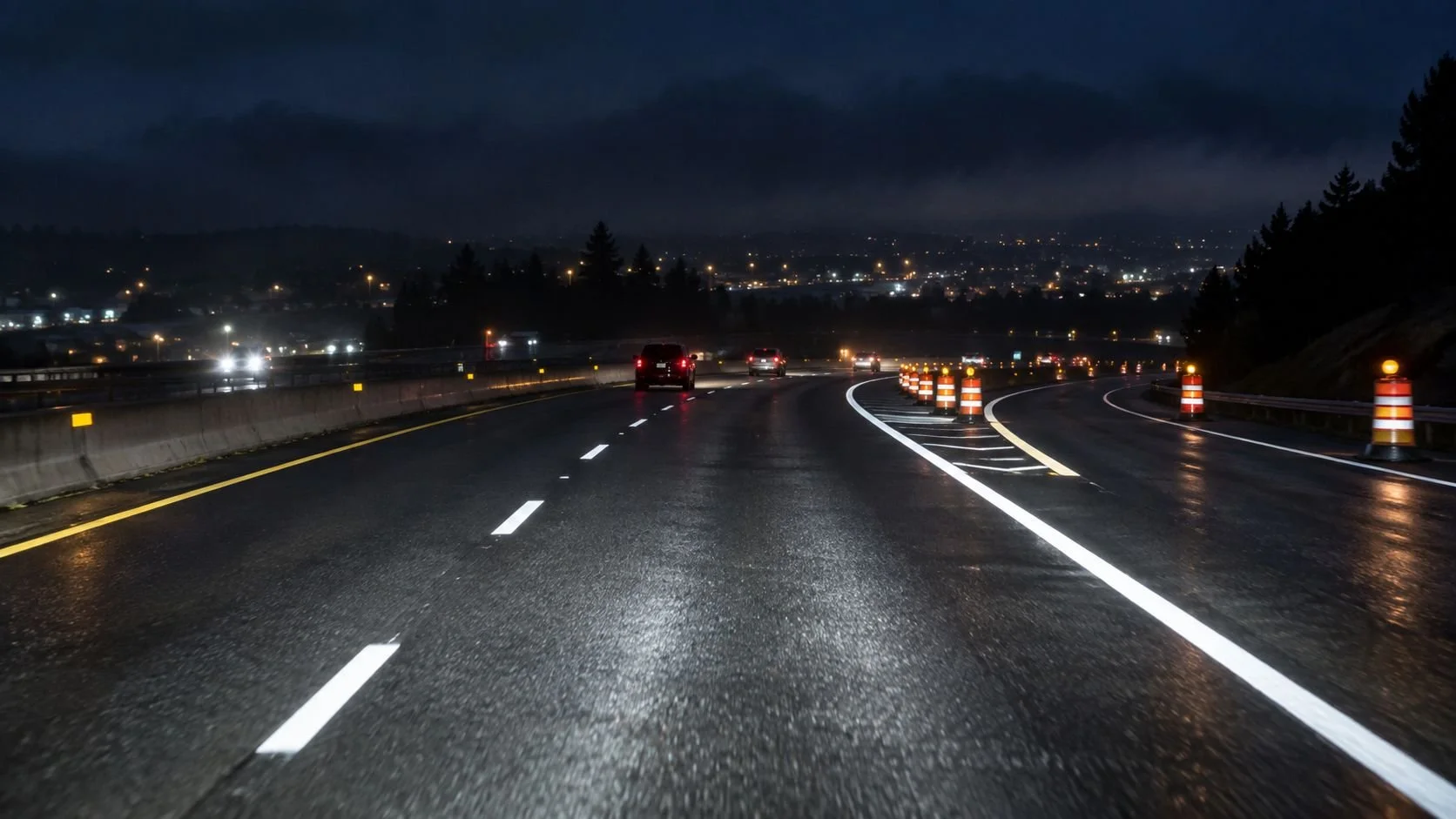
Driving at night requires drivers to recognize lane boundaries, curves, exits, and changes in traffic patterns in low-light conditions. Headlights provide some visibility, but drivers also depend on roadway markings to understand where they should position their vehicles.
Reflective highway striping helps drivers see lane lines and other pavement markings more clearly after dark. When headlights hit the reflective surface, the markings become easier to distinguish from the surrounding pavement, giving drivers a clearer view of the road ahead.
What makes highway striping reflective
Reflective highway markings usually contain materials designed to return light toward its source. Glass beads are commonly added to or embedded in pavement markings to create this effect.
When vehicle headlights hit these beads, the light is reflected toward the driver. This process is known as retroreflectivity, and it gives reflective pavement markings their brighter appearance at night.
The level of reflectivity can vary based on the marking material, application method, pavement condition, and the amount of wear the surface experiences over time.
How reflective highway striping helps drivers at night
Reflective striping plays an important role in helping drivers navigate different highway conditions when natural light is limited.
Makes lane boundaries easier to identify
Clearly visible lane lines help drivers understand where one travel lane ends and another begins. This is especially important on multilane highways, where several vehicles may be traveling alongside one another.
Strong lane visibility also helps drivers maintain a steadier position within their lane. When markings are faded or difficult to distinguish, it can take longer to determine the roadway's path ahead.
Helps drivers follow curves and roadway changes
Reflective markings can make curves, bends, and changes in roadway alignment easier for drivers to recognize before they reach them. Visible edge lines and lane markings provide a clearer indication of how the road continues.
This guidance can be especially useful on unfamiliar routes. Drivers may not know where the next curve or lane shift begins, so visible markings help communicate the direction of travel in advance.
Provides clearer guidance near exits and merging areas
Exits, entrance ramps, and merging areas often require drivers to identify lane divisions over relatively short distances. Reflective markings can make these areas easier to navigate after dark by showing where lanes continue, separate, or merge.
Clear markings also help drivers stay within the intended path as they approach an exit or enter a highway from a ramp. This can reduce uncertainty when multiple traffic movements are occurring in the same area.
Improves visibility in rain and low light conditions
Nighttime rain can reduce the contrast between the pavement and painted lines. Wet road surfaces may also create glare from headlights, making roadway details more difficult to distinguish.
Well-maintained reflective markings can provide stronger visual guidance in these conditions because they are designed to reflect headlight illumination back toward the driver. This can make lane lines easier to recognize when overall pavement visibility is reduced.
Helps drivers navigate work zones and temporary lane shifts
Work zones can introduce temporary lane shifts, narrowed lanes, and changes to the roadway’s normal layout. Reflective striping helps drivers identify these adjusted travel paths after dark and understand where they should position their vehicles.
What affects the nighttime visibility of reflective striping
Reflective markings do not maintain the same level of visibility indefinitely. Traffic, weather, pavement conditions, and routine wear can gradually affect how clearly the markings appear under headlights.
Repeated tire contact can wear down the marking material and its reflective glass beads, reducing the amount of light reflected back toward drivers. Dirt and road debris can also make markings less visible by reducing their contrast with the pavement.
Cracks, deterioration, and road repairs can further affect the appearance and continuity of highway pavement markings. In some cases, markings may remain easy to see during the day but become noticeably less visible after dark.
Regular inspections can help identify these changes before the markings become difficult for drivers to follow at night.
Maintaining clear reflective markings
Effective reflective striping depends on proper application and regular inspection and maintenance. Keeping pavement markings clear and visible helps preserve the nighttime guidance drivers rely on across highways and other roadways.
Alpha Space Control offers highway striping services for projects that require clear, durable pavement markings. Quality pavement markings can help maintain consistent visibility and support safer nighttime travel.
Frequently asked questions
How long does reflective highway striping last?
The service life depends on traffic volume, weather, pavement condition, marking material, and maintenance. Heavily traveled roadways may require restriping more frequently.
Do reflective road markings help reduce nighttime accidents?
Reflective markings can support safer nighttime driving by making lane boundaries, curves, exits, merging areas, and roadway changes easier for drivers to identify after dark.
How do reflective pavement markings work?
Reflective elements, such as glass beads, return light from vehicle headlights toward drivers, making pavement markings appear brighter and easier to identify at night.
When should reflective highway markings be refreshed?
Reflective markings should be refreshed when they become faded, patchy, damaged, or noticeably harder to see under headlights or during wet nighttime conditions.
Why do reflective highway markings become less visible over time?
Traffic wear, weather exposure, pavement damage, dirt, and the gradual loss of reflective glass beads can all reduce nighttime visibility.