
Parking lot striping seasonal guide: When and why should you repaint?
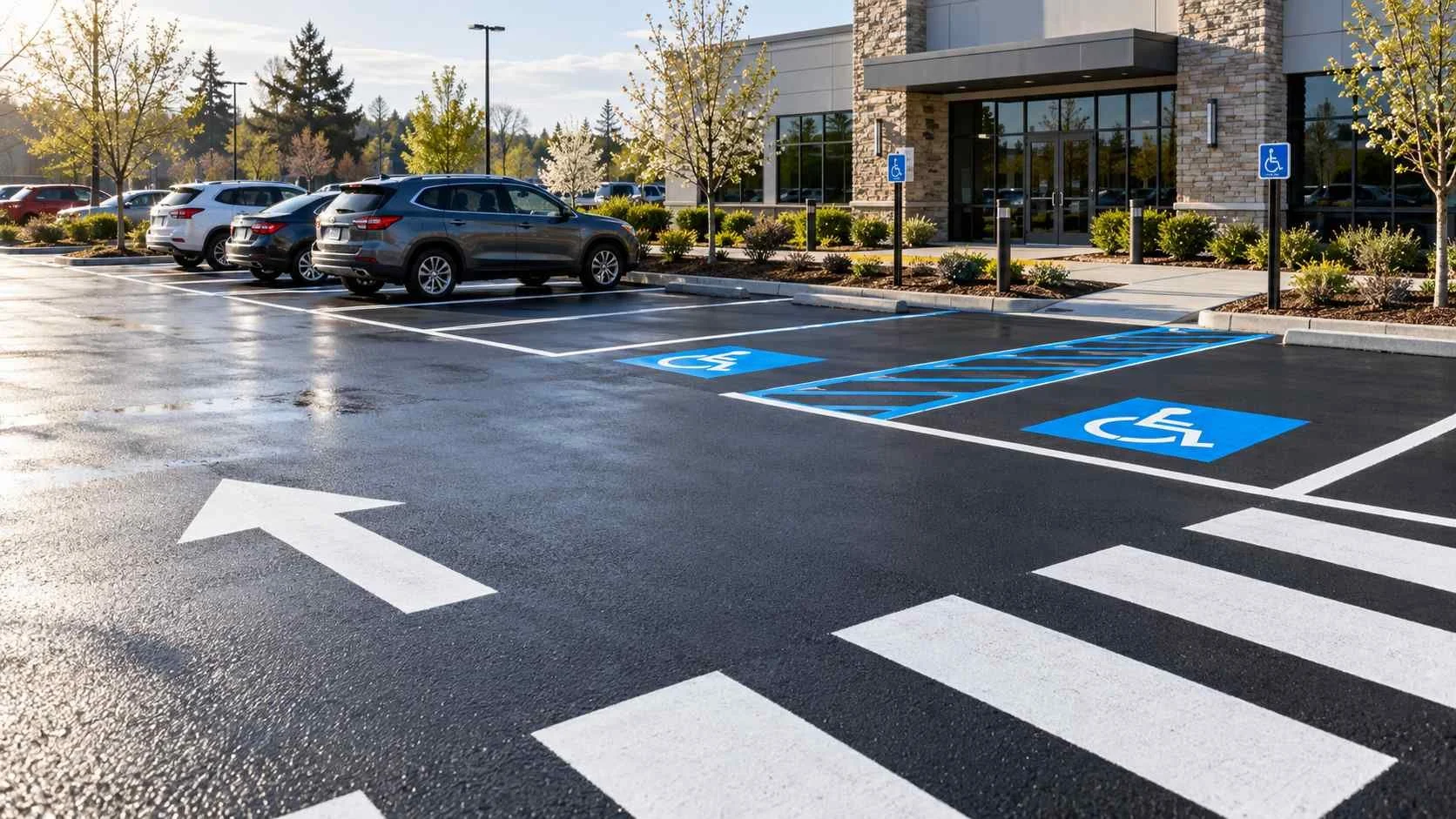
Parking lot markings naturally fade over time. Daily traffic, sunlight, weather, dirt and debris, and snow removal can all gradually reduce the visibility of lines and symbols.
Because every property experiences different levels of traffic and exposure, there’s no fixed repainting schedule. The right time depends on the condition of your markings and pavement, along with factors such as the season.
Maintaining clear parking lot striping is important because it helps drivers and pedestrians navigate the lot safely. This guide covers the signs that your lot may need restriping, why repainting matters, and how seasonal conditions affect the best time to schedule the work.
How do you know when parking lot striping needs to be repainted?
A few visible signs can tell you it is time to consider restriping:
Parking space lines are becoming difficult to see: If drivers have to look closely to tell where spaces begin and end, the lines should be refreshed.
Directional arrows or pavement symbols have worn away: Consider repainting when arrows, stop markings, or other symbols are incomplete or hard to follow.
Crosswalk markings look patchy or faded: Pedestrian crossings should remain easy for drivers to identify. Noticeable fading is a good reason to schedule restriping.
Fire lanes or loading zones are losing definition: If these areas no longer stand out clearly from regular parking spaces, their markings should be refreshed.
Accessible parking markings are unclear: Accessible spaces, access aisles, and pavement symbols should remain easy to identify. Worn markings should be addressed promptly.
Why should faded parking lot lines be repainted?
Faded lines can make a parking lot confusing and less efficient. When parking boundaries and traffic directions are unclear, drivers may park unevenly, use space poorly, or have trouble understanding how they should move through the property.
Restriping restores a clear, organized layout. It makes parking spaces, traffic lanes, pedestrian crossings, and designated areas easier to identify and follow.
Clear markings can also support property compliance. Accessible parking spaces, access aisles, fire lanes, and other regulated areas are subject to applicable federal, state, and local requirements.
How often should a parking lot be restriped?
Many parking lots benefit from restriping every one to two years, but the right schedule depends on the property.
A busy commercial lot may require restriping more frequently than a property with lighter traffic. Other factors can also affect how long striping lasts, including:
Weather and sun exposure
Pavement condition
Snow and snowplow activity
Type of marking material used
Instead of relying only on the date of the last application, inspect the lot regularly and schedule parking lot striping and repainting when the markings begin to lose visibility.
What is the best time to restripe your parking lot?
Spring and summer are often preferred for restriping because warmer, drier weather generally provides better conditions for applying pavement markings. However, each season can play a role in planning and maintenance.
Spring can reveal winter damage
Spring is a good time to inspect your parking lot after winter. Snow, ice, freeze-thaw cycles, and snowplows can affect both pavement and existing markings.
An inspection can help identify faded striping, cracks, surface damage, and other repairs that should be completed before new lines are applied.
Summer often provides favorable conditions
Summer typically offers warmer pavement temperatures and longer stretches of dry weather. These conditions can make projects easier to schedule and help pavement-marking materials dry and bond properly.
Fall can be a good option when conditions allow
Fall may also be suitable for restriping if temperatures and pavement conditions remain within the requirements of the marking material. Refreshing worn lines in the fall can help improve visibility before winter weather arrives.
Winter is useful for inspection and planning
Cold temperatures, moisture, snow, and unpredictable weather can limit opportunities for pavement striping during winter.
Instead, winter can be used to inspect the existing layout, identify needed pavement repairs, review traffic patterns, and plan upcoming restriping work.
What should be checked before restriping?
Before restriping, check the pavement for cracks, surface damage, dirt, loose debris, or recent sealcoating, as these can affect how well new markings adhere. Addressing pavement issues and properly preparing the surface can help produce a better result.
It's also a good time to confirm that the current layout still works for the property. Review parking spaces, traffic lanes, loading areas, accessible spaces, fire lanes, pedestrian routes, entrances, and exits. If traffic patterns or the way the property is used have changed, the layout may need to change as well.
Plan your next parking lot restriping project
There’s no universal date when every parking lot needs to be restriped. The best approach is to keep an eye on the condition of the markings and plan the work around pavement needs, traffic levels, weather, and seasonal conditions.
If your lines are becoming difficult to see or your parking lot layout needs attention, Alpha Space Control can help you evaluate the site and determine the right approach. Contact our team to discuss your property’s striping needs and find a suitable time for the project.
Frequently asked questions
How do you repaint parking lot lines?
The pavement is cleaned and prepared first. The layout is then confirmed, and a suitable marking material is applied using professional striping equipment.
Does heavy traffic make parking lot striping fade faster?
Yes. Frequent tire contact can cause markings to wear more quickly, especially near entrances, turns, and other high-traffic areas.
Should accessible parking markings be checked during restriping?
Yes. As part of the restriping process, accessible spaces, access aisles, signage, and routes should be reviewed before new markings are applied to ensure the layout meets applicable requirements.
How often should a parking lot be restriped?
Most parking lots benefit from restriping every one to two years. However, traffic volume, weather conditions, pavement condition, and the amount of marking wear may shorten that interval.
What is the best time of year to stripe a parking lot?
Spring and summer are often preferred because warmer, drier conditions support proper application. Fall may also work when temperatures and pavement conditions are suitable.